For property and facility managers
Take over faster. Answer owners clearly. Hand the building back responsibly.
Managers become the unofficial memory of every building they run, and that memory lives in inboxes, drives and relationships. Harmelo gives the property its own record, so you are valued for how well you manage the building, not because its history is trapped in your head.
A demonstration is a virtual walkthrough using demonstration data.
- The problem
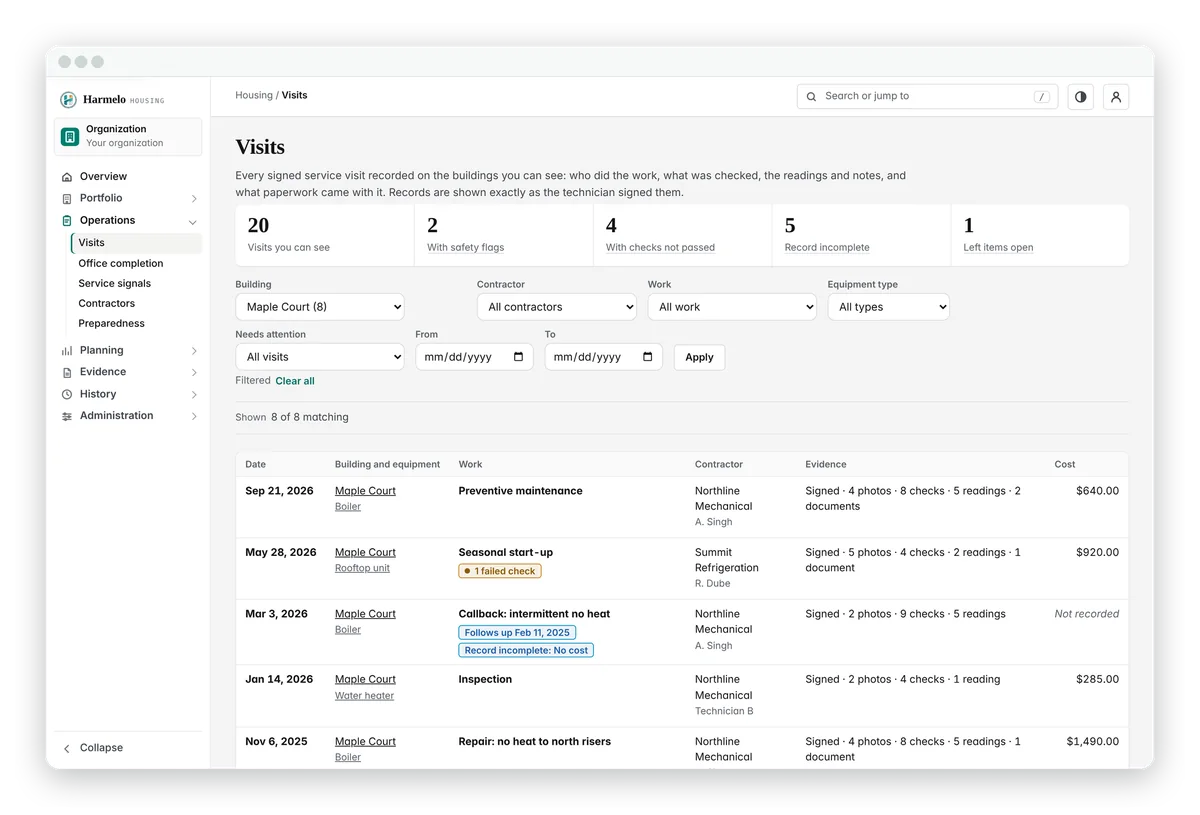
- Owners ask what was done, and the answer sits in several vendor portals.
- What Harmelo does
- Signed visits from every vendor on one record per building.
- The outcome
- Owner reporting you can stand behind.
What it costs today
The building’s history walks out with people.
A newly managed property starts with weeks of reconstructing what is installed and who serviced it.
What was done last year sits with a vendor you no longer use.
The end of a management agreement turns into a file hunt.
What you receive
An operating picture you can stand behind.
- A structured starting point when you take over a building
- Equipment and contractor history per building
- Owner-ready evidence of completed work
- Open recommendations and recurring vendor or equipment issues
- Warranties and supporting documents with the equipment
- Consistent records across every vendor
- A professional handover when the management agreement ends
- The problem
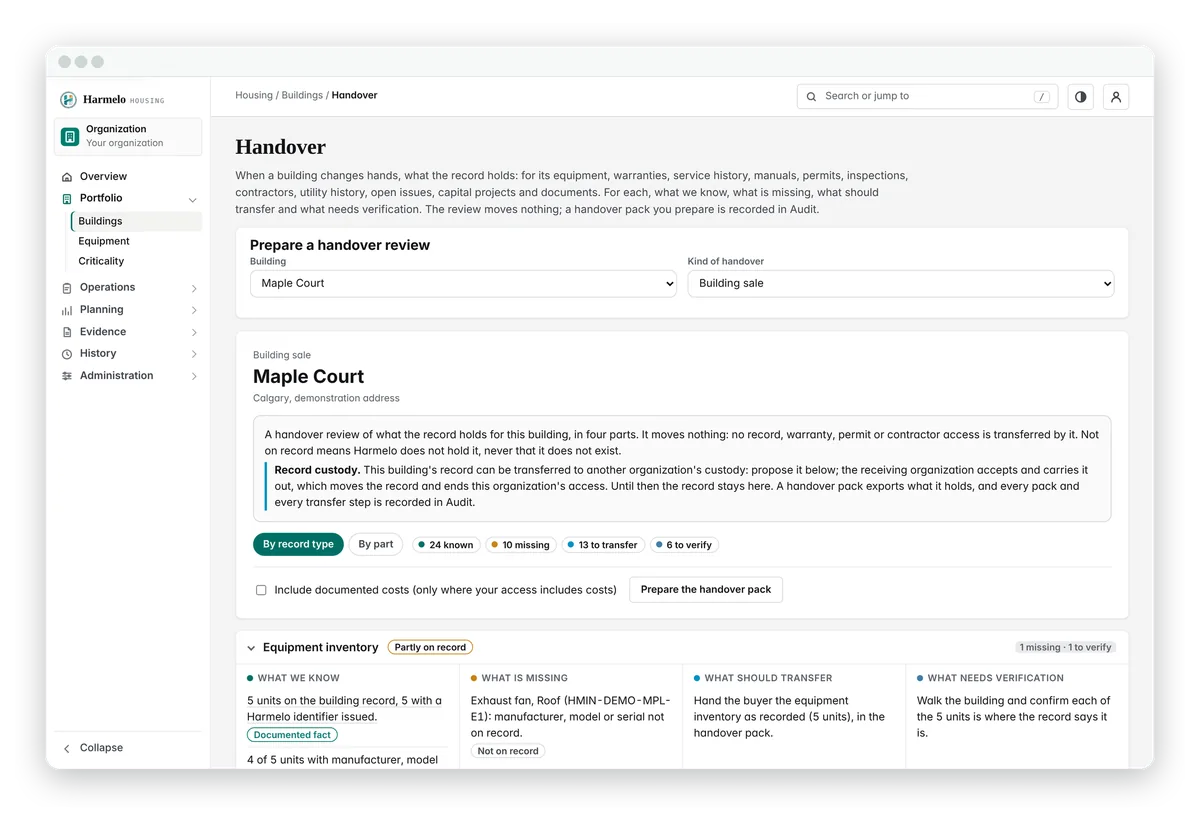
- A mandate ends and the building's history leaves with the team.
- What Harmelo does
- Handover review shows what moves with the building and what is missing.
- The outcome
- A professional handback, and a reputation for it.
How it works
From onboarding to handback.
- Onboard the propertyExisting documents are organized and missing information is listed from day one.
- Vendors file to one standardEvery contractor records work against the right equipment.
- Report to owners from the recordShow what was done, what was found and what is still open, with evidence.
- Hand back cleanlyThe record belongs to the property and moves with it.
Boundaries
It works alongside the systems you already run.
Harmelo is not a property management system, a work-order tool or a dispatch service. It is the record of what is installed and what has been done to it, alongside the systems you use for leases, tenants and scheduling.
The record you do not keep today is the file you rebuild at the next takeover or handback.
Next step
Request a virtual walkthrough
Tell us about the buildings you manage. Someone from Harmelo will reply to arrange a virtual walkthrough using demonstration data.
- No account is created and nothing is installed.
- Your details are used only to reply to this request.
- Want a figure first? Estimate pricing for your portfolio.